
Imagine your horse—a magnificent athlete—giving their all, but something is subtly hindering their every move. It’s not their training or their spirit; it’s the equipment. An ill-fitting saddle is a silent saboteur, slowly eroding your horse’s comfort and performance. This recap shares the expert secrets to saddle fit for horse performance that will help you identify a dangerous fit before it causes permanent damage.
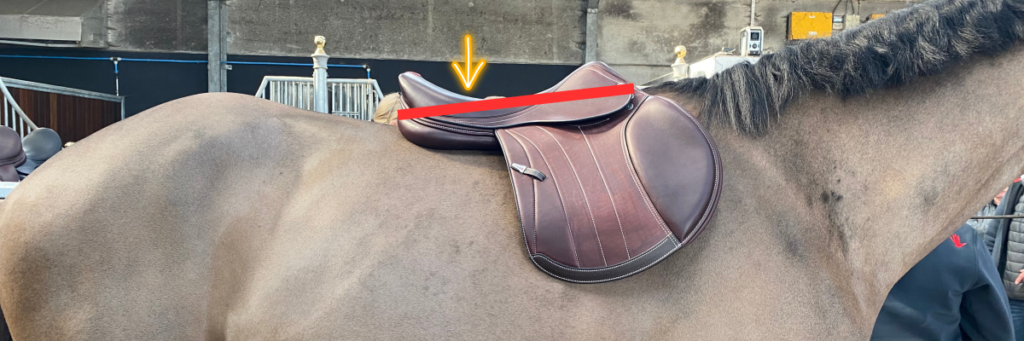
Alt Text: Professional checking the clearance of a saddle, ensuring optimal saddle fit for horse performance.
1. The Two-Finger Clearance Rule
One of the most dangerous mistakes is a saddle that rests on the withers. You should always have at least two fingers of clearance between the pommel and the horse’s withers, even with a rider in the seat.
2. Watching for “Dry Spots”
After a workout, look at your horse’s back. Dry spots in an otherwise sweaty area are secrets the horse is telling you: those are pressure points where the blood flow was constricted.
3. Stop the “Cinchy” Behavior
If your horse bites at the air when you tighten the girth, they are anticipating pain. Using English close contact saddles can often reduce the bulk that causes this sensitivity.
4. Identify Muscle Atrophy Early
If there are hollows behind your horse’s shoulders, the saddle is too narrow. This “choking” of the muscle prevents the horse from lifting their back and performing at an elite level.
5. The Tapping Test for Stability
A stable saddle shouldn’t rock or pivot. If you tap the back of the saddle and the front lifts, the balance is off, which will inevitably lead to a sore-backed horse.
6. Check the “Swept-Back” Shoulder
Modern saddle fit for horse performance requires the saddle to sit behind the shoulder blade. If the saddle sits too far forward, it acts like a brake every time your horse tries to extend their stride.
7. Trust Your Horse’s Attitude
The best expert in the world is your horse. If they are suddenly pinning their ears or refusing to move forward, trust their feedback—the fit is likely the culprit.